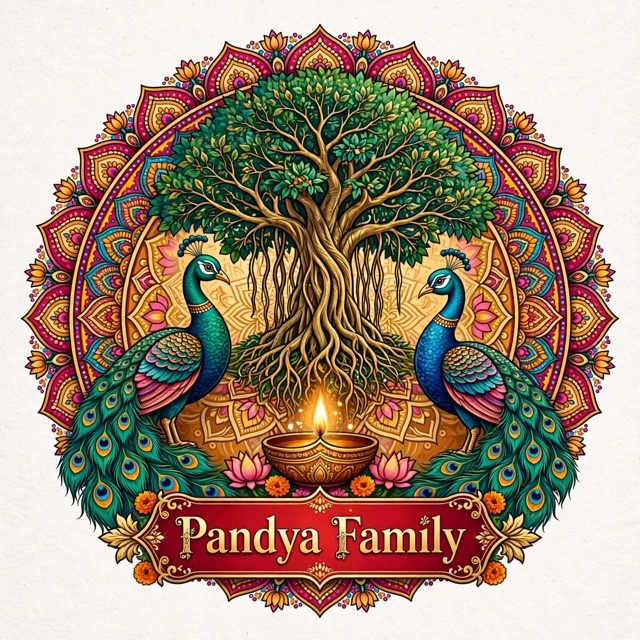
A heartfelt tribute to Ramkrishna Jeshankar Pandya and Kasturba (Ba) written by their sons (1984 CE)
Our late, revered father (Bapuji), Shri Ramkrishna Jeshankar Pandya, was born in 1901 on the day of Diwali. Our late, revered mother (Ba) was born in 1908. Bapuji originally hailed from Jinjar (Taluka Dhandhuka). Revered Ba was from Akala (District Amreli). Bapuji was an ideal teacher, and for much of his later career he also served as a principal. Both were endowed with the highest cultural refinement. Bapuji's personality was commanding — a full six feet in height, with a robust, imposing build, a fair complexion, and a confident, charismatic face.
He was a staunch advocate of discipline, living a highly regimented life, with a devotion to reading the newspaper. Wherever he traveled, he was like a living library for the entire village, offering advice, suggestions, and information to all. He was himself also a successful Ayurvedic physician (vaidya). He never wavered in the face of difficulty and knew no fear — he was the first to set foot in a house believed to be haunted. (This is a true story.)
He took the greatest care for his family's wellbeing. As long as he lived, he would say, "Nothing must ever happen to my twenty-one." Four sons and four daughters-in-law, with five, three, two, and three children respectively — thirteen children in all — together made the "twenty-one." He was always concerned with his daughters' all-round happiness, but his greatest concern was always for the wellbeing of his daughters-in-law. His sense of justice was so pure that he would take a daughter-in-law's side and reprimand anyone else in the household who wronged her. He was strict, yet large-hearted — an unbreakable, sheltering canopy for the family. Shall I put it in verse?
"A shadow vast like a Banyan tree, and emotions pure like a vow by Lord Nand.
A large heart like the Himalaya, as if belonging to the abode of the gods."
As for our revered Ba, Kasturba — what can be said of her grace and cultured spirit? The merit she accumulated over her lifetime will continue to bless not only her children but generations to come. Though she had little formal education, her wisdom was unmatched. She held an inexhaustible knowledge of religious literature — the Ramayana, the Mahabharata, the Bhagavata, the Shrimad Bhagavad Gita, the Vishnu Sahasranama, the Ganpati Stavan, the Shakti Stotra, the Shiv Mahimna Stotra, the Hanuman Chalisa, and various vrat-kathas (fasting-ritual stories), among others. She was devoted to the haveli (household place of worship). Though occupied with religious storytelling and devotional singing (bhajan-kirtan), she still kept the family united through deep values and singular care. Running the household was, in effect, managing a small estate — the oversight of the vaidya practice, and the family business (yes, there was one) all fell under her watch. Milking four cows, churning butter at home, the pre-dawn grinding of the mill, and raising seven children well — she carried the full weight of this household work with grace and ease, and did so in an age without electricity or machines.
Physically strong and graceful, fair-complexioned, with a tall and cheerful bearing, a radiant forehead marked with a large, round, bright red bindi, and deep devotion to Shakti — how was she any less than the Divine Mother, Jagadamba, herself?
We will never forget the wisdom she shared with us in her own native, colloquial way of speaking.
Composed and at peace until the very end, revered Ba passed into the divine in her sleep. The family wept and wept and wept. Seeing our grief, our steady-hearted, revered Bapuji offered us comfort. These were his words: "Don't cry, child. She was happy. She lived seventy-five years — how much longer can one live?" As he said this, tears began to well up in his own eyes as well.
A family bond tender enough to melt even stone.
Shantilal Ramkrishna Pandya
Rajnikant R. Pandya
Arunkumar R. Pandya
Hemant R. Pandya
— offered as a heartfelt tribute of remembrance
અમારા સ્વ. પૂજ્ય પિતાશ્રી (બાપુજી) શ્રી રામકૃષ્ણ જેશંકર પંડ્યાનો જન્મ ઈ. સ. ૧૯૦૧ માં દિવાળીને દિવસે થયેલો. સ્વ. પૂજ્ય માતુશ્રી (બા) નો જન્મ ૧૯૦૮માં. બાપુજી મૂળ જીંજર (તા. ધંધુકા) ના. પૂ. બા અકાળા (જિ. અમરેલી) ના. બાપુજી એક આદર્શ શિક્ષક હતા. છેલ્લે ઘણો વખત આચાર્ય પણ હતા. બન્ને ઉચ્ચ સંસ્કર થી સંપન્ન. બાપુજીનું વ્યક્તિત્વ પ્રભાવશાળી. પુરા છ ફૂટની ઊંચાઈ ; ઘેઘુર પડછંદ કાયા. ગોરો વાન અને આત્મવિશ્વાસ ભરેલી પ્રતિભાશાળી મુખાકૃતિ.
શિસ્તના પ્રખર હિમાયતી . નિયમબધ્ધ જીવન. છાપાં વાંચવાનું વ્યસન. જે ગામ જાય ત્યાં ગામ આખાને માટે સલાહ સૂચન અને માહિતી પુરી પાડનાર જીવતી જાગતી લાયબ્રેરી જેવા. પોતે એક સફળ વૈદ્ય પણ ખરા. મુશ્કેલીમાંડગે નહિ એવા, દરે નહીં. ભૂત ભમે એવા ઘરમાં પેહલો પગ મુકનારા. (આ સત્ય હકીકત છે.)
કુટુંબની સુખાકારી માટે ખુબજ ચીવટ રાખતા. જીવ ત્યાં સુધી " મારા એકવીસને કઈં ન થવું જોઈએ" એમકેહતા. ચાર દીકરા, ચાર વહુવારું, એમના અનુક્રમે પાંચ, ત્રણ, બે અને ત્રણ એમ ૧૩ સંતાનો મળીને કુલ 'એકવીસ'. દીકરીઓની સર્વાંગી કુશળતા માટે એમને ચિંતા રહ્યા કરતી; પણ સહુથી વધારે ચિંતા એમને ઘરની વહુઓના ભલાની રહેતી. વહુનો પક્ષ લઈને ઘરનાં બીજાંને ધમકાવે એવી એમની વિશુદ્ધ ન્યાયભાવના. સખ્તાઈ હતી છતાં વિશાલ હૃદયનાં હતા. પરિવારને માટે એક અભેદ્ય છત્રછાયા સમા હતા. કવિતમાં કહું?
" છાયા તો વડળા જેવી, ભાવ તો નંદના સમ.
દેવોના ધામના જેવું હૈયું જાણે હિમાલય ."
પૂજ્ય બા, કસ્તુરબાની સંસ્કારિતા વિશે શું શું લખું? જીવનભર એમણે સંગ્રહેલું પુણ્ય માત્ર સંતાનોને નહીં પણ અનેક પેઢીઓને માંગલ્ય અર્પતું રહેશે. ભણેલા ઓછું છતાં અનન્ય વિદ્વવત્તા. રામાયણ, મહાભારત, ભાગવત, શ્રીમદ ભગવદગીતા, વિષ્ણુસહસ્ત્રનામ, ગણપતિસ્તવન, શક્તિસ્તોત્ર, શિવમહિમ્ન પાઠ, હનુમાન ચાલીસા, વ્રતકથાઓ વગેરે ધર્મ સાહિત્યનું પૂ. બાને અખૂટ જ્ઞાન હતું. હવેલીનો જીવ. કથાવાર્તા, ભજનકિર્તનમાં વ્યસ્ત છતાં કુટુંબને ઉચ્ચ સંસ્કારથી અને અનોખી સંભાળથી એકજુટ રાખેલું. અને ઘરનું કામ એટલે રજવાડાની રીતે નોકરી, વૈદું, વેપાર (હા, વેપાર પણ હતો.) -તેની ઉપર નજર રાખવાની. ચાર ગાયોના દુઝણા, ઘેર વલોણાં, પરોઢિયાની ઘંટીના ઘોર, સાત સંતાનોને સારી રીતે ઉછેરવા - આવા ઘરકામના ભારને પૂ.બા હસ્તે મુખે પહોંચી વળતા. - એ વીજળી અને યંત્ર વગરના જમાનામાં પણ.
શરીરે સશક્ત, દેખાવડા, ગોરા, ઊંચી પ્રસન્ન મુદ્રા, તેજસ્વી કપાળ પાર મોટો ગોળ લાલ ચટક ચાંદલો , શક્તિની ભક્તિ - એ કંઈ જગદંબાથી ઓછા ઉતરે?
એમની તળપદી ભાષાની શિખામણો અમે કદી નહીં ભુલીયે.
અંત સુધી સવસ્થ, પૂ.બા ઊંઘમાં જ પરમાત્મલીન થયા. કુટુંબીજનો રડયા, રડયા, રડયા. અમારો વિલાપ જોઈને ધીર હૃદયના પૂ.બાપુજીએ સાંત્વન આપ્યું. આ એમના શબ્દો છે, "રડો નહિ બેટા! સુખી હતી. પંચોતેર વર્ષ તો જીવ્યાં. પછી કેટલુંક જીવે?" એમ કેહતા એમની આંખે પણ આસું ટપકવા લાગ્યા.
પથ્થરને પણ પીગળાવે એવી ભીની કુટુંબભાવના.
શાંતિલાલ રામકૃષ્ણ પંડ્યા
રજનીકાંત રા પંડ્યા
અરુણકુમાર રા પંડ્યા
હેમંત રા પંડ્યા
ની ભાવભરી સ્મરણાંજલિ